
Spreadsheets hinder multi-entity financial consolidation by introducing manual errors and version control issues that delay the closing process. These tools lack the scalability required for complex intercompany eliminations and fail to provide real-time visibility into subsidiary performance. Transitioning to automated systems ensures greater accuracy and efficiency for finance teams managing multiple legal entities.
If your finance team is spending the final week of every close cycle manually reconciling intercompany transactions, chasing down subsidiary trial balances, and praying nobody touched the wrong cell in a shared spreadsheet, you already know something is broken. The problem is not effort or expertise; it is the tool. Spreadsheets were built for individual analysis, not for stitching together the financials of multiple legal entities with different currencies, charts of accounts, and reporting calendars. As your organization grows, that gap between what spreadsheets can handle and what your business actually requires gets wider and more expensive. In this article, you will learn exactly where consolidation workflows break down, what integrated automation looks like in practice, and how to evaluate whether your current approach is costing you more than you realize.
What Is Multi-Entity Financial Consolidation (And Why It Gets Complicated Fast)
Multi-entity financial consolidation is the process of combining financial data from multiple subsidiaries, divisions, or business units into a single, unified set of financial statements. That definition sounds straightforward. The execution is anything but.
It is worth being precise about what consolidation actually involves, because it is frequently confused with simple reporting aggregation. Adding up revenue across five entities is aggregation. Consolidation means eliminating intercompany transactions so that sales between related entities do not inflate group revenue, translating foreign currency balances using the correct rate at the correct point in time, and reconciling accounts that may be structured differently across each entity's chart of accounts. The resulting statements must reflect the group as a single economic unit, not a collection of independent ledgers.
Think of it this way: imagine five households in the same family each tracking their own finances in their own format, one in a spreadsheet, one in a notebook, one in a budgeting app, one in euros. Now merge all five into one coherent financial picture every single month. That is the operational reality finance teams face, and the complexity does not scale linearly. Add a sixth entity and you are not adding 20% more work; you are adding new intercompany relationships, another currency, another chart of accounts to reconcile, and another data source to manage.
For CFOs and VPs of Finance managing automated financial reporting and consolidation solutions for growing organizations, that nonlinear complexity is exactly where the pain concentrates.
The Hidden Costs of Running Multi-Entity Consolidation Through Spreadsheets
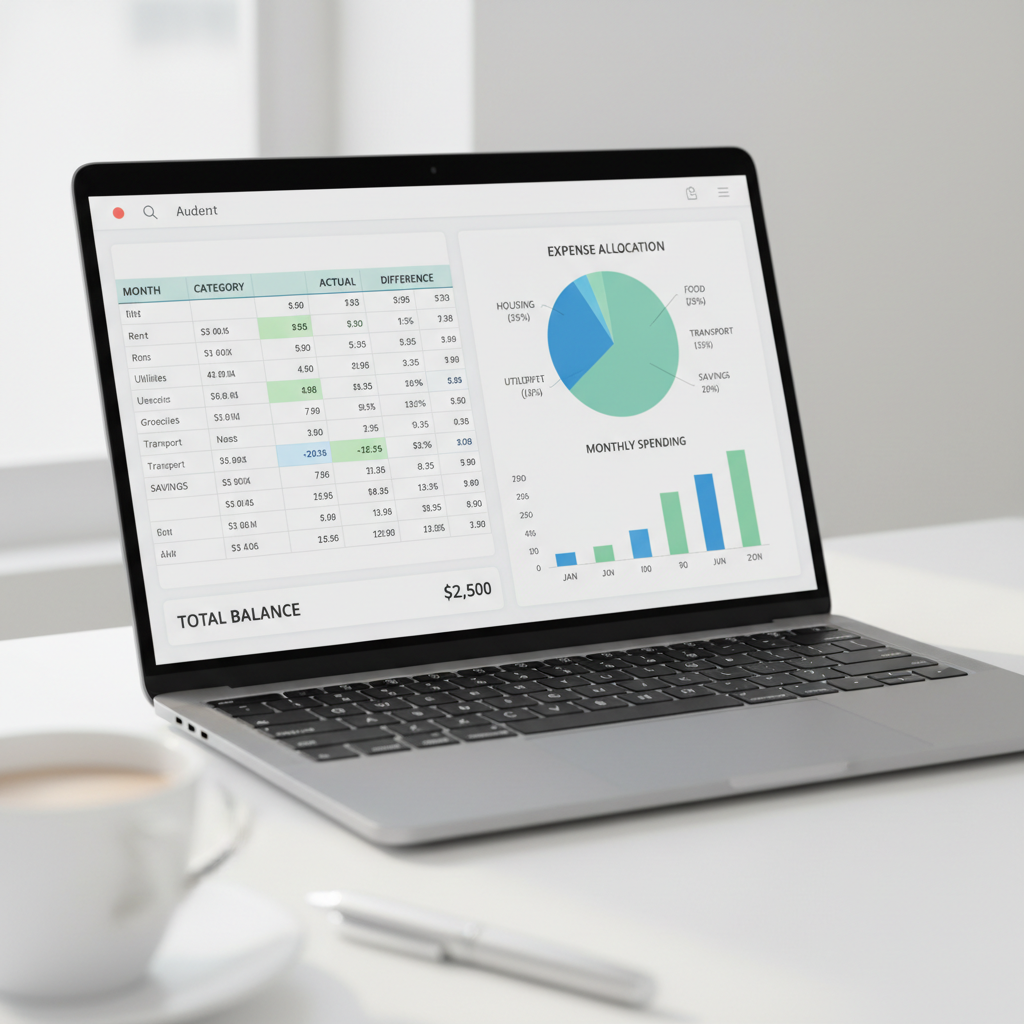
That nonlinear complexity described above becomes acutely visible the moment you try to run it through spreadsheets. The problems are not abstract; they show up as specific, recurring costs that finance teams absorb every single close cycle.
Days lost to manual data exports. Before any consolidation work happens, someone has to pull data from each entity's ERP or accounting system, reformat it, and load it into the master workbook. Across five or six entities, that extraction process routinely consumes two to three days of senior analyst time per close. That is not analysis. That is data plumbing.
Version control that quietly breaks results. 78% of finance teams still use spreadsheets as their primary method of moving data between systems. When three analysts are working in the same consolidation workbook, even with good file naming discipline, someone is working in an old version. The merge that happens afterward is manual, error-prone, and rarely documented.
Formula errors that nobody catches until it is too late. A single mislinked cell in a currency translation tab or intercompany elimination schedule can cascade through the entire model. The consolidated balance sheet balances, the numbers look reasonable, and the error ships to leadership. Spreadsheets have no mechanism to flag that a reference quietly broke when a tab was renamed last quarter.
No audit trail, and real compliance exposure. When auditors or a SOX review asks how a specific consolidated figure was derived, the answer in a spreadsheet environment is a chain of manual steps that cannot be fully reconstructed. That is not a documentation gap; it is a material compliance risk.
Burnout hiding inside the close calendar. Repetitive month-end data work is a retention problem. Skilled finance professionals who were hired to do analysis spend their close cycles doing data assembly. The productivity cost is visible. The turnover cost is larger and less visible.
Leadership operating on stale data. Because spreadsheet-based consolidation is a batch process that takes days, the numbers leadership uses to make decisions are already aged before anyone sees them. Real-time visibility is structurally impossible in this model.
These are the multi-entity financial consolidation challenges that do not appear in the budget line for spreadsheet software but accumulate steadily in close cycle length, error risk, audit findings, and team capacity.
The Five Specific Moments When Spreadsheets Break Down in Multi-Entity Environments
The multi-entity accounting challenges described above do not fail in theory. They fail at predictable, recurring moments in the close cycle. Here are the five scenarios finance teams recognize immediately.
1. Intercompany eliminations that never quite close out. Entity A books a $500,000 intercompany sale. Entity B records the corresponding payable, but uses a slightly different account code and posts it a day later, in a different period. The elimination schedule shows a $500,000 receivable that does not match a $500,000 payable. Now someone is manually hunting through two separate ERP instances, tracing transaction dates and account mappings, to find the $0 difference that is keeping the consolidated balance sheet from balancing. This happens every month. The 99% of multinational corporations that report operational difficulties with intercompany reconciliation are not describing a rare edge case; they are describing this Tuesday.
2. Currency translation applied inconsistently. A subsidiary reports in euros. The consolidation workbook applies period-end rates to balance sheet accounts and average rates to income statement accounts, which is correct. But the cumulative translation adjustment flowing to equity depends on getting both rates exactly right, every period, without formula drift. One analyst updates the rate table; another analyst's tab still references a hardcoded cell from three months ago. The CTA is wrong, the equity section does not reconcile, and finding the source requires auditing every rate reference in the workbook.
3. Chart of accounts remapping done manually, every period. Entity C was acquired two years ago and still runs its own account structure. Every close, someone exports its trial balance and manually maps 200 line items to the parent's chart of accounts using a lookup table maintained in a separate spreadsheet. That mapping file is not version-controlled. When accounts are added or renamed at either entity, the map breaks silently.
4. One late entity stalls the entire close. Five entities are ready. The sixth, a regional division three time zones away, submits its trial balance two days late. The consolidation cannot close without it, but leadership is already asking for preliminary numbers. The finance team either publishes incomplete results or waits, either outcome creating downstream problems.
5. Audit season exposes what the close process could not see. Auditors request support for a specific consolidated revenue figure. The team's answer is a sequence of manual steps across multiple workbook versions, export files with timestamps, and email threads confirming which version was final. There is no direct, traceable path from the published number back to the source transactions. That is not just an inconvenience; it is the audit finding that should have been avoided months earlier.
How ERP Integration Changes the Multi-Entity Consolidation Equation
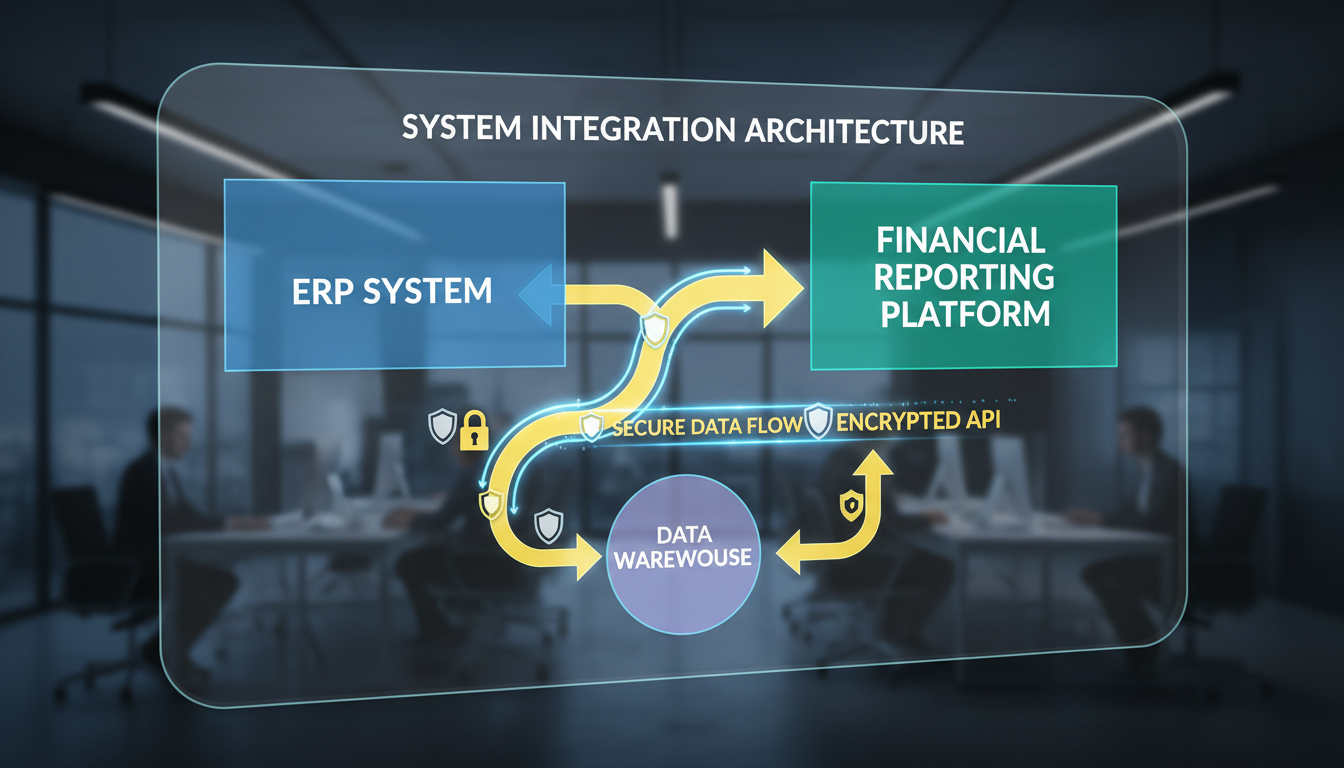
Every failure point described above shares a common root: finance teams are using spreadsheets to fill a gap that ERP systems were never designed to close. ERP platforms are exceptional at capturing and storing transactional data at the entity level. They were not built to produce consolidated financial statements across multiple entities natively, and that limitation becomes structural when those entities run different ERP instances or different systems altogether. The data exists; the architecture to consolidate it does not.
That gap is exactly where the manual export-transform-load cycle lives. Someone extracts a trial balance, reformats it, loads it into a workbook, and repeats that process for every entity, every period. ERP integration at the reporting layer eliminates that cycle entirely.
When a browser-based financial reporting platform connects directly to source ERP systems, several things change at once. Data pulls happen on a defined schedule without analyst intervention. Mapping logic, the account remapping that was previously maintained in an unversioned lookup spreadsheet, is configured once at the system level and applied consistently every period. Every stakeholder accesses the same numbers simultaneously, from a single source, rather than working from whichever exported file landed in their inbox.
fyisoft's platform is built specifically for multi-entity environments, integrating with ERP systems to remove that manual middle layer. The practical result is a consolidation process that can reduce reporting time by 50% or more, not by making spreadsheets faster, but by replacing the parts of the workflow that spreadsheets were never equipped to handle reliably.
What Automated Multi-Entity Consolidation Actually Looks Like in Practice

Removing the manual middle layer changes not just the speed of consolidation but the nature of the work itself. Here is what that shift looks like across each stage of the close cycle.
Step 1: Data collection. In an automated workflow, trial balances are pulled directly from connected ERP systems on a configured schedule. No analyst exports a file, reformats columns, or emails a workbook to a shared drive. The data arrives consistently, in the same structure, every period.
Step 2: Intercompany matching. Rather than maintaining a separate reconciliation spreadsheet and manually hunting for mismatches, the system flags intercompany transactions and matches them against corresponding entries across entities. Discrepancies surface immediately, with enough context to resolve them, rather than emerging at 11pm on close day.
Step 3: Currency translation. Translation rules are configured once at the system level. Period-end rates apply to balance sheet accounts, average rates apply to income statement accounts, and the cumulative translation adjustment flows to equity automatically. There is no rate table to update, no formula reference to audit.
Step 4: Consolidated statements. A complete P&L, balance sheet, and cash flow statement are generated and available in a browser. Nobody is copying tab contents or linking across workbooks. The output is the same format every period, immediately accessible to every stakeholder with appropriate permissions.
Step 5: Variance analysis and drill-down. When a consolidated revenue figure looks unusual, a finance professional can drill into it on demand, tracing back to the contributing entities and source transactions without building a new analysis from scratch.
Finance teams can configure and run this entire workflow without IT involvement, a material advantage for lean departments. Secure 24/7 access from any device means the close is not constrained by office location or network access, which matters when entities span multiple time zones.
Key Questions to Ask Before Choosing a Multi-Entity Consolidation Solution

Knowing what automated consolidation can do is one thing. Knowing how to evaluate the tools claiming to deliver it is another. Most finance leaders entering this selection process discover quickly that the market includes everything from purpose-built consolidation platforms to lightweight reporting add-ons that still require significant manual handling behind the scenes. These six questions cut through that noise.
1. Does it integrate directly with your existing ERP systems, or does it require manual data exports? If the answer involves any version of "export a file and upload it," the manual middle layer has not been removed; it has just been relocated. True integration means the platform pulls data directly from source systems on a schedule.
2. Can it handle intercompany eliminations automatically, including partial ownership structures? Simple eliminations are a baseline. The harder test is whether the system handles minority interest calculations and partial consolidations without manual journal entries to compensate.
3. Does it support multiple currencies with configurable translation rules? Configurable means finance can define which rate applies to which account type, and adjust that logic without IT involvement. Hardcoded translation logic will break the moment your entity structure changes.
4. Is there a full audit trail for every number in the consolidated report? Every figure in a published statement should trace directly to its source transaction. If that path requires reconstructing a sequence of manual steps, the platform is not solving the compliance problem described earlier.
5. Can finance users configure and run reports without IT involvement? This is a practical capacity question. A platform that requires a developer to modify report layouts or add a new entity is not designed for lean finance teams.
6. What is the realistic implementation timeline? A solution requiring a multi-month consulting engagement before the first report runs is deferring value, not delivering it. The right platform should reach a working state in weeks, not quarters.
The underlying standard for all six questions is the same: the right automated financial reporting and consolidation solutions should reduce close time materially, not simply transfer the manual effort into a different interface.
Why Finance Teams in Multi-Entity Organizations Cannot Afford to Wait
Those six evaluation questions share an implicit premise: the decision to modernize consolidation is a matter of timing, not direction. The data makes the direction clear. 75% of finance managers consider their financial close processes ineffective, and the cause is consistently the same, manual workflows and fragmented systems that cannot keep pace with organizational complexity.
The consequences are not hypothetical. When multi-entity financial consolidation runs days behind schedule, leadership is making capital allocation and operational decisions against numbers that are already stale. When audit trails exist only as reconstructed sequences of spreadsheet versions and email threads, a single auditor request can consume weeks of remediation work. When skilled analysts spend close cycles doing data extraction instead of analysis, the organization is not saving money by avoiding a software investment; it is paying full analyst salaries for data plumbing, and eventually losing those analysts to organizations that use their skills more meaningfully.
Spreadsheet consolidation is a cost-deferral strategy, not a cost-saving one. The accumulated risk eventually surfaces as a restatement, an audit finding, or a resignation that leaves institutional knowledge walking out the door.
Organizations that automate this process reclaim something more valuable than close days. They redirect their finance teams toward forecasting, scenario analysis, and strategic support, the work that actually informs business decisions. To see how fyisoft approaches this, get in touch with our team or explore our automated financial reporting and consolidation solutions.
As your business grows, the limitations of manual spreadsheets become increasingly clear. Transitioning to a dedicated consolidation solution ensures that your financial data remains accurate, accessible, and scalable for future expansion. If you are ready to move beyond these manual processes and want expert help refining your reporting strategy, you can learn more About our mission and the ways we assist organizations with complex financial needs. Our team is dedicated to helping you achieve greater efficiency through professional support and modern technology.